Australia
Online ordering for restaurants and cafés in Australia, without a per-order cut
Uber Eats, DoorDash and Menulog carry a lot of Australian takeaway, and their restaurant commission is set in your agreement rather than on a public page. Tuckly is an online ordering system that gives your venue its own pick up and delivery site with no platform commission, built around the regulars who would rather order from you.
- Pick up and delivery from one menu, dine-in QR if you want it
- Your own drivers for delivery; pick up needs none
- Card costs at your processor's rate, priced in now that surcharging ends
- Square for Restaurants and Lightspeed listed with a real status
Orders · Today
Accepting ordersNew 2
Delivery
Rider to assign
A$36
Pickup
Ready by 13:15
A$13
Preparing 2
Dine-in · Table 6
Scanned QR 12:48
A$49
Delivery
Own rider · Sam
A$23
On the way 1
Delivery
Picked up 12:40
A$62
Illustrative view.
What is particular to Australia
-
Surcharging is going away, so price it in
The Reserve Bank's March 2026 conclusions remove surcharging on debit, prepaid and credit cards on the designated eftpos, Mastercard and Visa networks from 1 October 2026. Card costs on a direct order therefore come out of the menu price, which is a reason to know your processor's rate precisely.
-
Allergen declarations for unpackaged food
Under the FSANZ allergen labelling rules (PEAL in force 25 February 2024), cafés and takeaways selling unpackaged food must display allergen declarations in connection with the food or provide them on request. Dietary notes on menu items are the online version of that.
-
Commission is in your contract, not on a public page
Our October 2026 check did not find published Australian restaurant commission rates for Uber Eats, DoorDash or Menulog. Use your own agreement in any comparison, and treat percentages quoted elsewhere as hearsay.
-
GST on direct orders is your line
GST applies to restaurant and takeaway food, and nothing about that changes with the ordering channel. Your BAS already includes counter sales; direct orders join them.
Worked example, Brisbane
A Thai takeaway that moves 120 orders a month to its own site
Because Australian marketplace commission is not published, this example uses an assumption you should replace with your own rate. Suppose the agreement takes 25 per cent on delivered orders and the average order is A$48. That is A$12 per order.
The owner puts a QR on the counter and on every bag and moves 120 orders a month direct, mostly pick up. On those orders the A$12 disappears and a card fee at the processor's published rate takes its place; at a hypothetical 1.75 per cent plus 30 cents it would be about A$1.14. Call it roughly A$1,300 a month kept, before any driver cost on the delivered share. Pick up orders have no driver cost.
The marketplace keeps the rest of the volume in this example. Put your own commission rate and order value into the commission calculator rather than trusting these placeholders.
Figures are illustrative and chosen to show the arithmetic, not to predict your results.
Setting up an Australian venue on direct ordering
- 1
Build the menu, allergen notes included
Sizes as variants, extra protein as add-ons, a brunch menu that hides at 11:30. Put allergen declarations in dietary notes so they travel with the item.
- 2
Set pick up lead times and delivery suburbs
Pick up lead times per category. For delivery, the suburbs or areas you cover and a charge per area. Tuckly does not calculate delivery by distance; it uses the areas you define.
- 3
Connect a payment processor and price in the card cost
Online payment runs through a supported processor at its published rate; Tuckly adds nothing. With surcharging on the main card networks ending on 1 October 2026, build that rate into prices rather than planning a surcharge at checkout.
- 4
Decide who delivers
Porter does not operate in Australia and Tuckly has no Australian courier integration, so delivery on your site means your own driver assigned per order. Pick up only is a perfectly good first setup; see delivery management.
- 5
Check your POS on the directory
Square for Restaurants is available in Australia and Square's APIs are open to developers with Australian payment processing. Lightspeed Restaurant is available in Australia with partner-gated API access. Clover lists Australia among its markets. Each has a status page.
- 6
Move the link
Google Business Profile, Instagram, the bag, the counter. The promotion guide sequences the first two months.
Where a direct order and a marketplace order differ
| Cost line | Your Tuckly site | Marketplace order |
|---|---|---|
| Platform commission | None from Tuckly | Per your agreement; not published for Australia in our October 2026 check |
| Card processing | Your processor's published rate | Bundled into platform deductions |
| Card surcharge to the customer | Not on designated networks from 1 October 2026 (RBA, March 2026); price it in | Not applicable; the platform sets customer fees |
| Delivery | Your own driver, or none on pick up. No courier integration in Australia | Platform riders |
| Allergen declarations | Dietary notes on items that you control | Whatever the listing format allows |
| Customer details | On your order screen | Held by the platform |
| Software | Subscription per the pricing page | None; paid through commission |
The morning rush is a pick up problem, and pick up is what direct does best
A café with a queue out the door at 8am loses the people who look at it and keep walking. Pre-orders on the café's own site let them order from the tram and collect at the counter. No commission, no driver, no app for the customer to install. The same site takes the lunch delivery order for the office upstairs if you have someone to walk it over.
- Pick up lead time per category so the barista is not ambushed
- Order notes that reach the ticket (oat milk, extra hot)
- Saved details for the regulars
- Dine-in QR for the people who stay
Kabir Street Kitchen
Indian · Downtown
Deliver to · 12 Market Street
Chef's specials
View all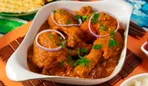 Mains
Butter chicken
A$18
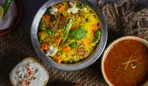 Thalis
Biryani thali
A$19
- Add
Butter chicken thali
With rice, two rotis and raita
A$18
- Add
Paneer tikka wrap
Mint chutney, pickled onion
A$11
- Add
Masala chai
Served hot, 250 ml
A$2
Direct ordering for Australian venues: the parts worth thinking through
Australian cafés and takeaways run on volume and speed. A direct ordering site helps with both, provided you set it up around the orders you can actually fulfil. Here is the thinking behind each decision.
Pick up first
The cleanest direct order is a pick up. For a café that is a 7:45am flat white and toastie ordered from the tram; for a Thai or Indian takeaway it is the Friday night family order collected on the way home. No commission, no driver, a card fee of cents. The takeaway ordering page is about getting this right: lead times per category so the kitchen is not surprised, a ready status the customer can see, and order notes that make it to the ticket.
Delivery on your own site means your own driver, because Porter does not operate in Australia and Tuckly has no other local courier integration. That is a staffing decision, not a software one. Many venues keep marketplace delivery for the reach and run the direct site for pick up only. Others put a driver on for Friday and Saturday nights once the direct volume justifies it.
Card costs after 1 October 2026
The Reserve Bank’s March 2026 conclusions remove surcharging on debit, prepaid and credit cards on the designated eftpos, Mastercard and Visa networks from 1 October 2026. For a direct ordering site that means the card fee is a cost of sale, not a line the customer pays. The practical response is to know your processor’s rate to the cent and price accordingly. On a direct order that fee is the only percentage; Tuckly does not add one, and the pricing page covers the subscription.
Allergens on the menu
Australia’s allergen labelling rules (PEAL) came into force on 25 February 2024. For unpackaged food sold at cafés and takeaways, allergen declarations must be displayed in connection with the food or provided to the purchaser on request. Online, the equivalent is dietary notes on each item that the customer can read before ordering. Keep them accurate when a supplier changes a sauce; the menu builder makes the edit a thirty-second job from a phone.
Dine-in QR for the people who stay
Venues with tables can put a QR on each one so guests order from their seat into the same order screen as the pick up orders. It is the same menu, the same allergen notes and the same no-commission arithmetic, and it takes the pressure off the counter at the exact moment the pick up queue peaks. Guests use the phone browser; there is nothing to install.
POS: a status, not a logo
Square for Restaurants is sold in Australia and Square’s developer APIs are open, with Australian payment processing supported. Lightspeed Restaurant is available in Australia with API access reserved for partners. Clover lists Australia among its markets and approves production developer accounts individually. The integrations directory states for each whether Tuckly pushes orders in, syncs the menu, or is still at the “talk to us” stage. If your POS is not listed, it is not integrated, and orders would be keyed in by hand, which is worth knowing before you count on saving that time.
Marketplaces stay on
None of this requires leaving Uber Eats, DoorDash or Menulog. They bring the tourist, the new resident and the office that has never heard of you. The direct site is for the people who have. Running both means two order screens for a while, which most venues already have; the direct one is the screen with the better margin on it.
The first fortnight
Put the link on Google Business Profile. Print a QR on the next run of bags or a counter card. Tell the regulars. Then compare the marketplace statement at the end of the month with the one before, and use the commission calculator with your real rate to see what a hundred orders moved is worth.
Questions from Australian operators
What do Uber Eats, DoorDash and Menulog charge Australian restaurants?
We could not find published Australian restaurant commission rates on their partner pages in October 2026, and we will not guess. Your agreement states your rate. The guide to how delivery app commissions work explains how tiers are typically structured, which helps when reading the contract.
Can I add a card surcharge on direct orders?
The RBA's March 2026 decision removes surcharging on debit, prepaid and credit cards on the designated eftpos, Mastercard and Visa networks from 1 October 2026. Tuckly has no surcharge feature to rely on either way; price the card cost into the menu.
How do I offer delivery with no driver?
On your direct site you cannot; Porter does not operate in Australia and Tuckly has no other local courier connection. Offer pick up on the direct site and keep marketplace delivery for reach, or employ a driver for the busy nights. See self-delivery.
Is Square for Restaurants supported?
Square is available in Australia and its APIs are open with Australian payment processing. Whether Tuckly pushes orders into it today, or syncs menus, is stated on the Square page rather than assumed here.
Do I have to show allergens online?
FSANZ rules for unpackaged food require allergen declarations to be displayed in connection with the food or provided on request. Putting them in item dietary notes on your menu is the sensible way to meet that online, alongside your in-store practice.
What does a direct order cost in total?
Your processor's card fee, your driver's cost on delivered orders, packaging, GST as with any sale, and the Tuckly subscription per the pricing page. No platform commission.
Give the queue a way to order from the tram
Set up the menu, connect a processor, choose pick up or delivery, and put the QR on the counter. No platform commission on direct orders; card fees, driver costs and GST apply as described.
Gateway fees, delivery and taxes are separate. Pricing
Other countries
Last reviewed 29 October 2026.